Meet the BeepLab One
Hey friend,
For years now, I've been dreaming of a seriously fun music gadget, and it's finally time to send it into the world. Subscribe to the mailing list to be notified when the BeepLab is released:
You can also follow along on Instagram and Twitter. Big updates will come by email, so definitely sign up for the mailing list if you really want one. I won't spam you or sell your email address.
What is it?
It’s a tiny portable music looper that gets you jamming immediately. It has a USB port that powers your MIDI controller and an audio jack that connects to your speaker or headphones.
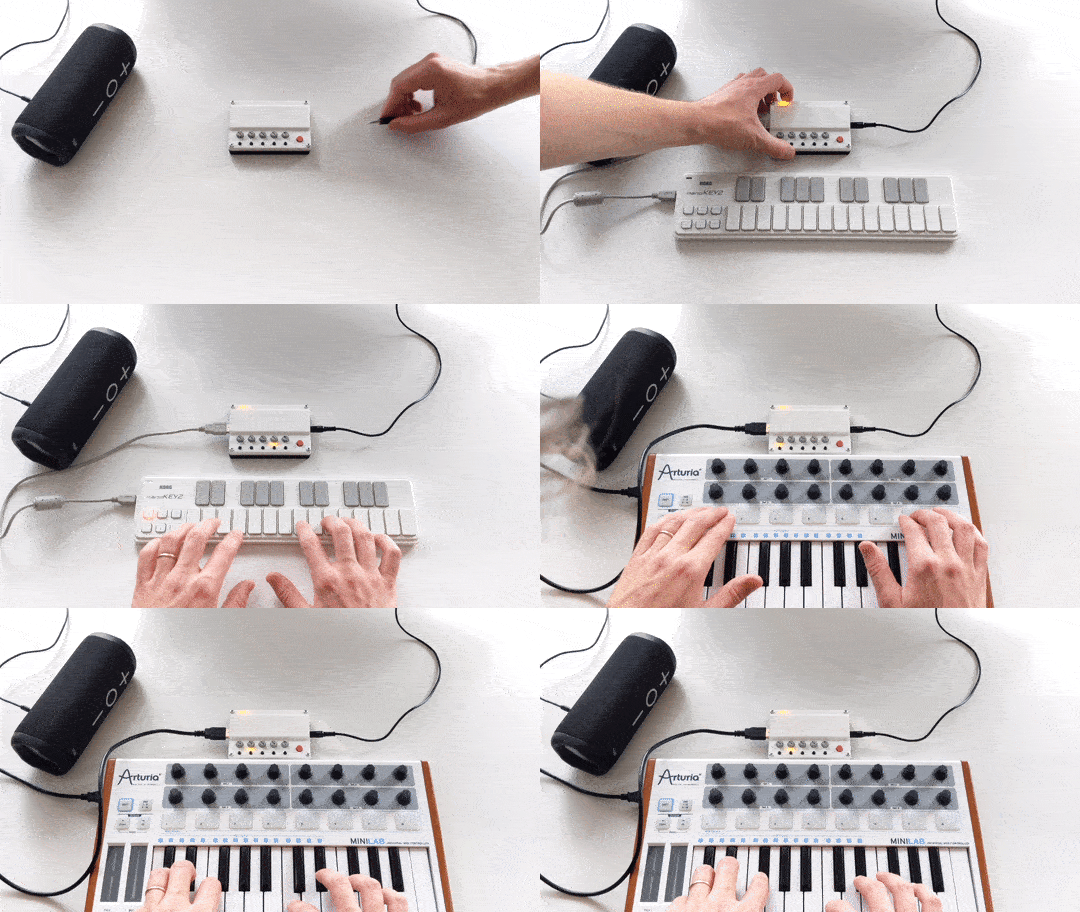
How does it work?
It ships with software that gives you:
- Four instrument tracks with individual volume control.
- A metronome to toggle a click track.
- A tempo knob that stretches and shrinks recorded notes.
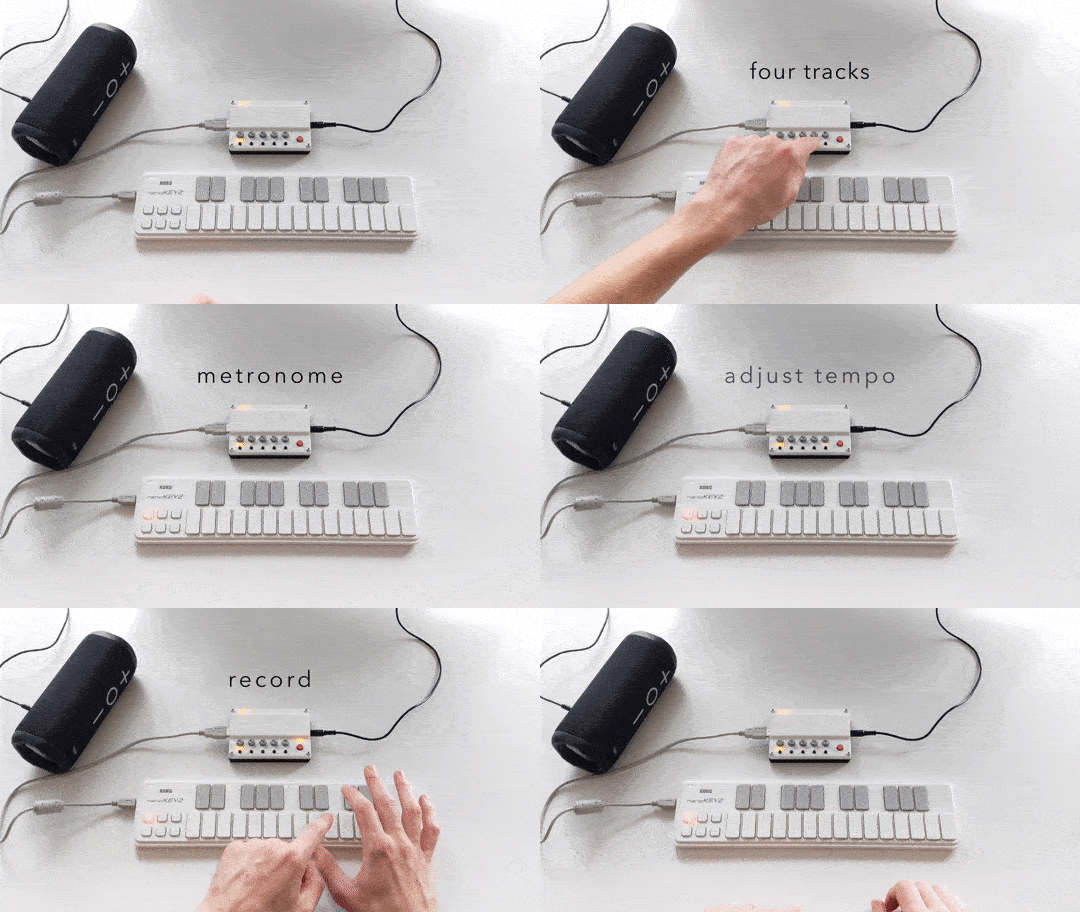
How does it sound?
Pretty good! Check out the video below. It's two minutes long; skip to about 1:20 for full sound. I left it uncut so you can see how quick it is to make a tune.
Why not use a computer?
I love making loops with a MIDI controller and a computer, but there's always a few speed bumps - turn on computer, log in, start up software, make new project, add new track, pick instrument - and then finally, play music.
Compare that to a guitar sitting on a stand. Just pick it up, and play. I wanted that same immediate feeling, but I didn’t want a piano. I wanted a composition tool - like a computer or a phone - but even simpler to use.
No logging in, no starting apps, no emails, no dongles, no notifications, no naming a new project, no distractions. Just turn it on, and play.
What else can it do?
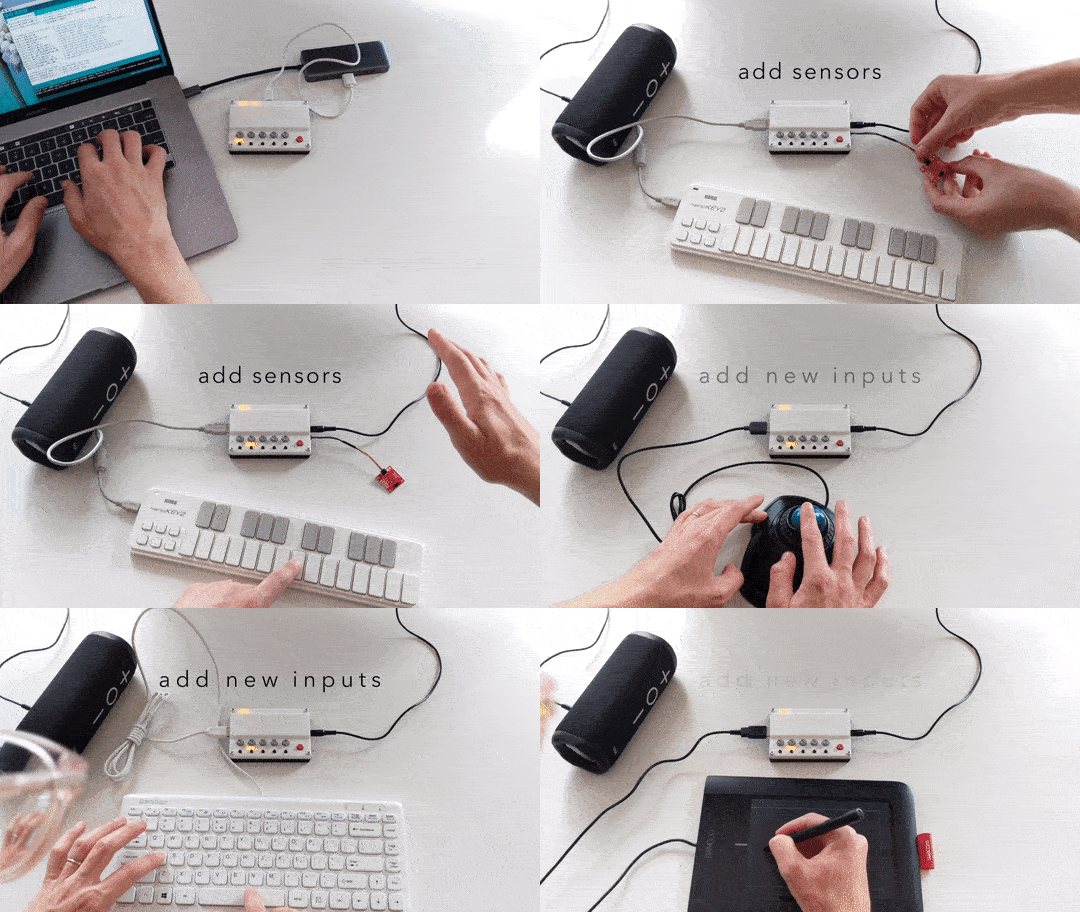
At its core, the BeepLab is an Arduino Uno, and the software will be provided open source. I want to give you an easy and fun way to learn electronics programming, without needing to solder anything yourself.
The BeepLab can jam with more than just a MIDI controller. It has a USB port, and a Qwiic port. Qwiic is a system of connectors that make it easy to add sensors to your project without soldering.
Some ideas:
- Make music with a mouse, a keyboard, or a video game controller.
- Use a pressure sensor and a 3D-printed mouthpiece to make a trumpet.
- Use a pulse sensor to set the track’s tempo to your heart rate.
You can also change the default instruments: the synth chip has 128 different instruments that you can use.
What can't it do?
There are some things the BeepLab cannot do. You can only store 100 notes in recording. You can only pick from the 128 onboard instruments, no samples. And you can only listen to loops as you play them, no saving loops.
But it’s just... A. Ton. Of. Fun. I'd argue the simplicity makes it more fun, because it’s just so darn easy to pick up and start playing. In practice, 100 notes is quite enough to lay out some face-scrunchy uhh-huh funk to jam along with.
OK, I want one!
Awesome! I'll run a Kickstarter campaign or similar when I gather enough interest. It's real, it works, and it's ready for manufacturing. Below is the final version for release.
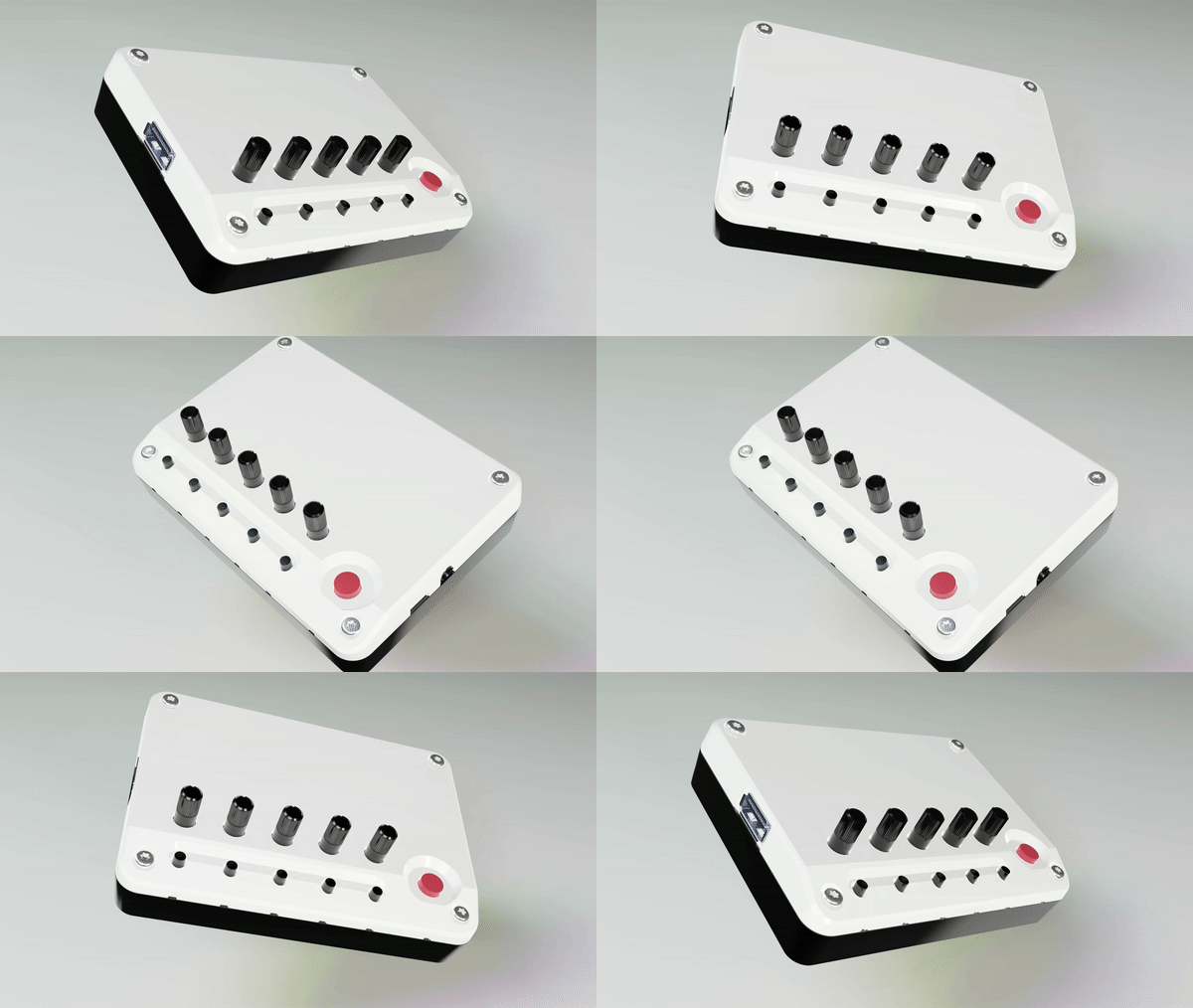
If you want one, sign up for the mailing list. It's the best way for me to gauge interest, and big updates like a release announcement will come by email first. You can also follow along on Instagram and Twitter.
What's next?
I was in engineering school as the Arduino really started taking off, and I feel a debt of gratitude to the ecosystem it created. I think of this as my humble homage.
I'd love to see this grow into a line of instruments and tools for music producers, musicians, engineers, and students alike. It's a fun music gadget by itself, and music is a fun way to get hooked on programming.
Thank you!
Huge thanks to all the people who have offered their feedback and support: Chris Quintero, Obnoxico, Mick Tinker, Spencer Wright, Russ Waddell, Skyler Adams, James Marks, Russ Fogle, Nick Parker, Basheer Tome, Shawn Kirsch, Joshua Schachter, Nick Chelyapov, Serena May, Dieter Brommer, Dylan Guelig, Marcelo Coelho, Kevin Greene, and Andrew Edman.
I'd also like to thank Oleg at Circuits@Home and Limor Fried / Ladyada at Adafruit. Oleg built the USB Host Shield project which makes reading from USB possible. Ladyada wrote the library that gets the MIDI synth chip running. Without these projects, this one would have taken much, much longer.
And big thanks to you for your interest. I hope you enjoy!
Alan